
How does our approach to sleep support secure relationships while
fostering growing independence?
Written by Maddy Boss
Sleep is a deeply individual experience for infants and toddlers, shaped by their home routines,
temperament, and sense of security. At our centre, we recognise that sleep is not just a routine
part of the day, but a care moment that sits at the heart of Mana Atua | Wellbeing and emotional
regulation as described in Te Whāriki (Ministry of Education [MoE], 2017).
We aim to mirror each child’s home sleep routines as closely as possible while gently supporting
their growing independence. For some tamariki this may involve being rocked and successfully
transferred into their cot once settled, while for others it may mean gradually reducing physical
support so they can settle with reassurance nearby. Sleep is always guided by relationship,
readiness, and the cues each child communicates.
Ongoing conversations with whānau are central to this process about how their nights have
been, what has changed, and how we can work together to support consistency between home
and the centre. These exchanges reflect whanaungatanga and responsive relationships (MoE,
2017) and ensure sleep practices remain aligned with each child’s home environment and
emotional needs.

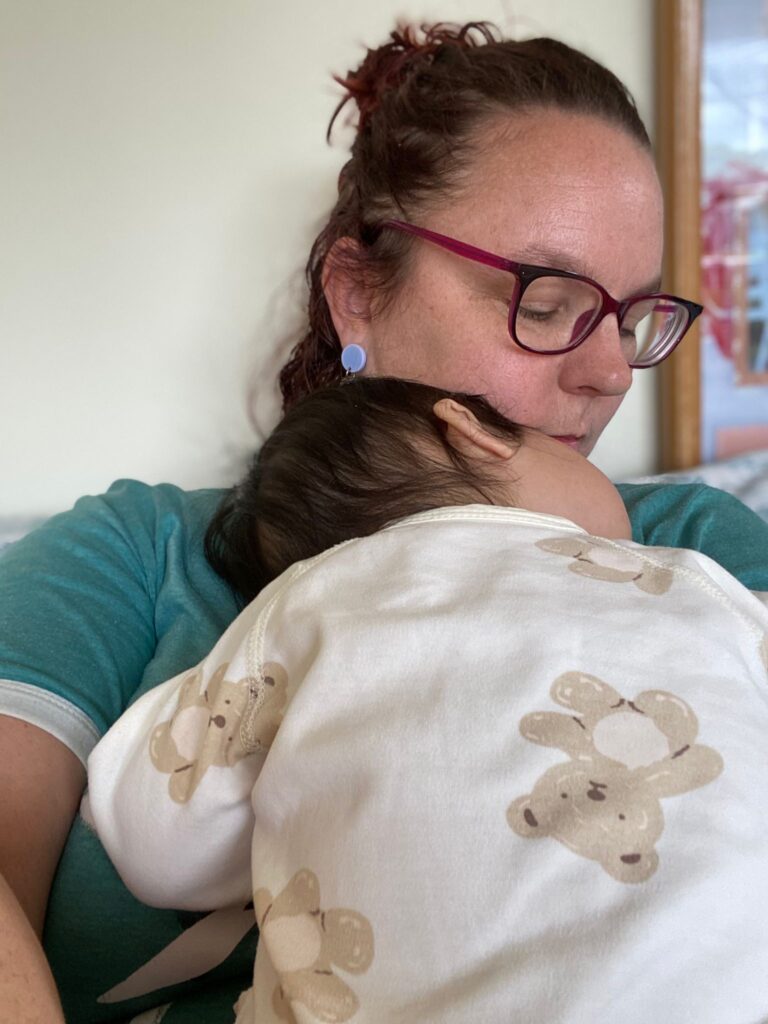
Sleep support in our infant environment is highly responsive and relational. Contact sleeping is
one of the ways we provide comfort and co-regulation for pēpi who need closer support,
particularly during times of transition, illness, separation anxiety, or disrupted sleep patterns.
Not all children require contact sleeping. Instead, we respond flexibly to individual needs. Some
children need it consistently, others only occasionally. This reflects Mana Whenua | belonging,
where home routines, identities, and rhythms are valued and carried into the centre environment
(MoE, 2017).
We use predictable routines such as nappy changes, sleep sacks, white noise, and familiar
lullabies to create secure sleep associations for tamariki. Comfort items from home are also
encouraged to strengthen continuity between home and the centre. Settling approaches remain
consistent and responsive, including holding and rocking children, patting or gently rocking them
in their cot, sitting alongside them as they settle, and offering touch-based reassurance such as
hand holding or gentle strokes. As children show readiness, physical support is gradually
reduced in line with their cues. We also draw on familiar supports such as weighted blankets or
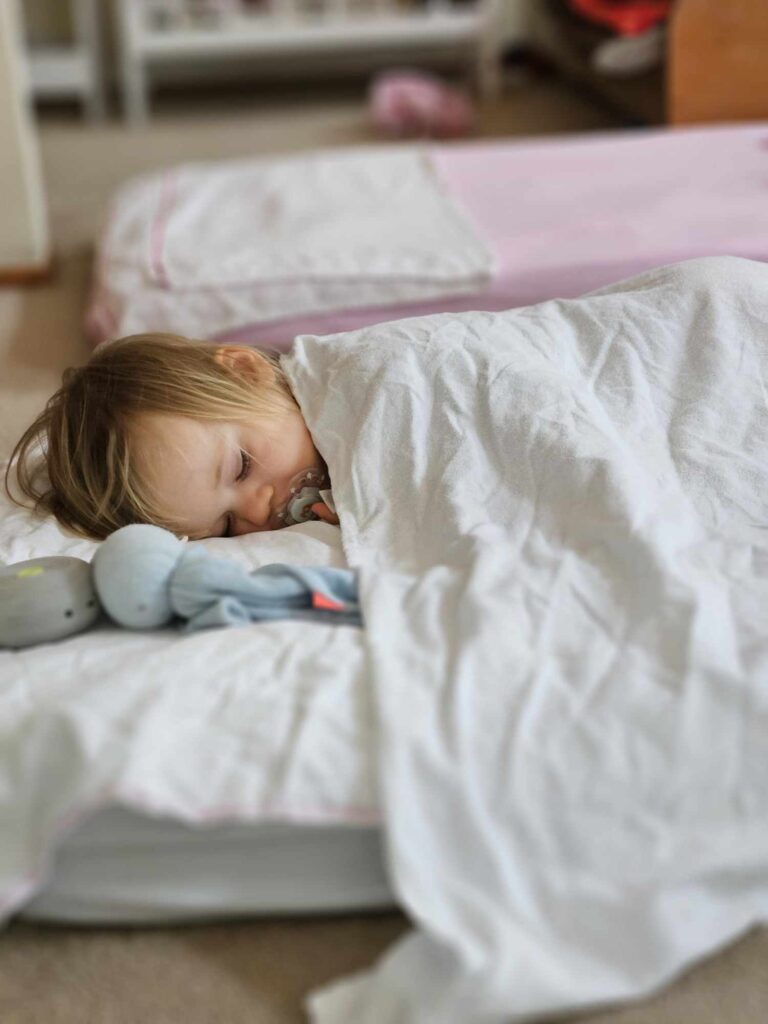
items from home to maintain emotional continuity. At times, we adapt the environment for
example, bringing a cot mattress into shared infant spaces to reduce separation anxiety and
support a smoother transition into independent sleep.
A successful transition is not measured by speed, but by emotional safety. It often looks like a
child becoming more settled in their cot, accepting reassurance without full physical contact,
and gradually building confidence to fall asleep with a kaiako nearby.
Sleep is one of the most vulnerable times in a child’s day. As highlighted in Te Whāriki (Mo E,
2017), caregiving moments such as sleep are not separate from learning they are central to it.
When tamariki feel safe in these moments, they are more able to regulate emotions, form
trusting relationships, and engage confidently in exploration during their waking hours.
We consistently observe that when children feel secure with kaiako, they settle more quickly,
show reduced distress during transitions, and become more relaxed within their sleep
environment. Over time, many move from needing close physical contact to requiring only
presence and reassurance, and eventually begin developing their own settling strategies.
Research supports this relational approach. Attachment theory highlights that secure,
responsive caregiving supports emotional regulation and safety in times of vulnerability. Children
who experience consistent co-regulation are more likely to develop stable sleep patterns and
increased independence over time (McNab, 2012). Wider early childhood research also
emphasises that secure attachment relationships form the foundation for autonomy rather than
a barrier to it (Du Plessis, 2009).
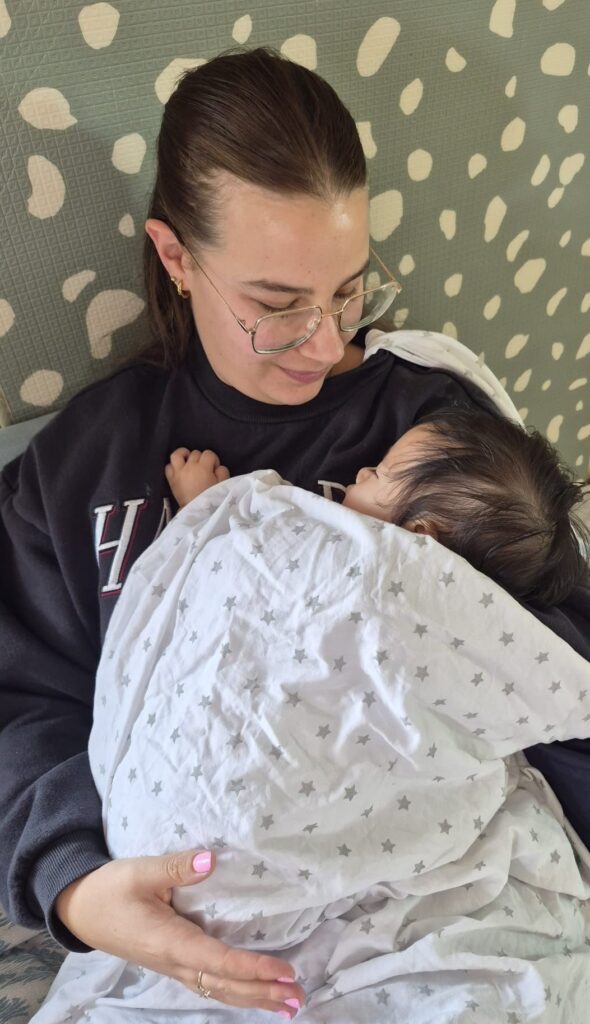
A common misconception about contact sleeping is that it prevents children from becoming
independent sleepers. In our experience, the opposite is often true. When children feel safe,
secure, and emotionally supported, they are more able to gradually develop confidence in their
own sleep space. Contact sleeping is not something we aim to maintain indefinitely, but rather
one of many tools used to support children at different stages of their sleep journey. We see
contact sleeping as part of a continuum of responsive care. When emotional needs are
consistently met, children are more able to move toward independence at their own pace.
Transitioning away from contact sleeping is gradual and responsive. Small, repeated
opportunities allow children to become familiar with sleeping in their cot without overwhelming
change. This may involve settling in their sleep space earlier, reducing physical contact over
time, or increasing reassurance through presence rather than touch.
At our centre, we believe sleep is not just about rest, it is a care practice built on trust,
relationship, and responsiveness. It is a time where emotional wellbeing is strengthened,
belonging is reinforced, and independence is gently nurtured.
By working in partnership with whānau and responding to each child’s cues, we aim to create
sleep environments where tamariki feel safe enough to rest deeply and supported enough to
grow into independence when they are ready.
REFERENCES
Du Plessis, K. (2009). Early childhood teacher-child attachment: A brief review of the literature.
He Kupu, 2(1).
https://www.hekupu.ac.nz/article/early-childhood-teacher-child-attachment-brief-review-lit
erature
McNab, N. (2012). Sleep practices and nap quality in infants transitioning to early childhood
education centres: Comparing naps in the home and centre (Master of Arts thesis,
University of Canterbury). University of Canterbury Research Repository.
https://ir.canterbury.ac.nz/server/api/core/bitstreams/ebe6fe83-6af0-49a4-81c7-49a45a4
bdb0d/content
Ministry of Education. Te Tāhuhu o te Mātauranga. (2017). Te Whāriki/He whāriki matauranga
mō ngā mokopuna o Aotearoa: Early childhood
curriculum.https://www.education.govt.nz/early-childhood/teaching-and-learning/te-whari
ki